Up Close: Dr. Stephen Galloway on the Art and Science of Veterinary Dentistry
Paws and Pearly Whites, Up-Close Series Episode 4
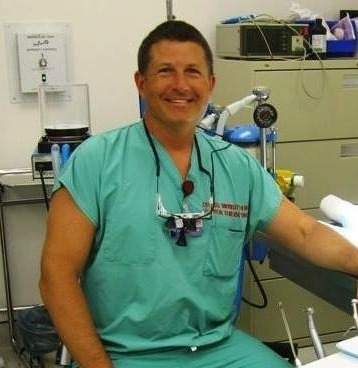
Dr. Stephen Galloway has one of the most unusual résumés in veterinary medicine. A 1986 graduate of West Point with a degree in Nuclear Engineering Systems, he served as a U.S. Army infantry officer, earning the Purple Heart, the Combat Infantryman’s Badge, the Master Parachutist Badge, and the Ranger Tab before trading combat tours for canine molars. He earned his DVM from North Carolina State University in 1996 and went on to become one of the few veterinarians in the world board-certified in both small animal and equine dentistry — a diplomate of the American Veterinary Dental College in both specialties and an equine fellow of the Academy of Veterinary Dentistry.
Based in Memphis, Galloway has spent nearly three decades treating everything from house cats to zoo animals, chaired the American Association of Equine Practitioners’ Dentistry Committee, and served as president of both the Tennessee Veterinary Medical Association and the Tennessee Board of Veterinary Medical Examiners. We sat down with him to talk about his path into the field, how he approaches unfamiliar cases, the ethics of unlicensed dental work, and what’s next for the industry.
On leaving the Army for veterinary medicine
Will N: Could you tell us about your journey toward veterinary medicine, and what you love about the job?
Dr. Galloway: I was an infantry officer in the Army. After my second combat tour, my family and I decided I needed a new career, and I actually started interviewing for corporate management jobs — companies like to hire ex-military officers to manage their operations. But my real passion at the time was training bird dogs and working with horses. I had something of an epiphany: I didn’t want to manage people. I wanted to work with animals, and I wanted a profession I could keep growing into intellectually. Veterinary medicine offered that — no two days are alike. That’s what pulled me in, and thirty years later, it’s what’s kept me going. You have to do something you’re passionate about.
On treating everything from horses to rabbits
Will N: What’s the most unusual or challenging case you’ve worked on?
Dr. Galloway: Honestly, most mammals are more similar than people assume. Being boarded in both large and small animal dentistry means I can borrow techniques across species — something that works in a horse might solve a problem in a small animal, and vice versa. Equine work isn’t just teeth, either; a huge part of our caseload involves sinus and upper respiratory surgery, since board certification in dentistry really means certification in oral and maxillofacial surgery. We do a lot of cancer surgery in dogs and cats, a lot of sinus work in horses. Every case is intellectually and physically challenging in its own way. The real reward comes after: you can’t measure pain in an animal directly, but two weeks after a dental procedure, an old dog is acting like a puppy again. That’s the payoff.
Interestingly, a rabbit’s teeth are structurally similar to a horse’s — they just erupt much faster. What I’ve learned in horses applies to rabbits, and to guinea pigs too. Smaller isn’t necessarily easier.
On prepping for exotic and zoo cases
Will N: How do you prepare for surgery on a species you don’t see every day — a zoo animal, for instance?
Dr. Galloway: It’s much easier now, with the internet. Any case has to be approached with principles, not a bag of tricks — dental and surgical principles apply across species. Rule one is knowing the anatomy; rule two is not damaging anything that isn’t already damaged, which again comes down to anatomy. You review the species’ anatomy, then apply the same underlying principles you’ve learned elsewhere. These days there are excellent references — I have a book that covers the dentition of nearly every species imaginable. In the old days you had to hunt one down; now they’re readily available.
On recognizing pain in animals
Will L: You mentioned it’s hard to tell exactly how much pain an animal is in — it often just shows up as behavior. How do you distinguish a horse that’s simply in a bad mood from one that’s genuinely in pain?
Dr. Galloway: “Bad mood” is a rule-out diagnosis, not a default one. If a condition would hurt a person, I assume it hurts an animal until proven otherwise — the nerves are the same across mammals, give or take minor variation. It’s actually worse in animals, because concealing pain is a survival instinct. A horse is a prey animal; in the wild, showing pain gets you eaten. Cats are the same way — they often won’t show pain until they stop eating altogether. When people try to assess pain in animals by guesswork, they usually guess wrong.
On unlicensed dental work
Will L: Some people offer horse teeth “floating” without being licensed vets. What’s your take on that kind of work?
Dr. Galloway: You see the equivalent in the dog and cat world too — groomers brushing teeth, anesthesia-free dentistry. None of that should be treated as a healthcare service. Dentistry exists to support the animal’s overall systemic health, and every dental decision has to be weighed against how it affects the whole patient. When people without full diagnostic training start picking and choosing procedures, it leads to misdiagnosis and over- or under-treatment. Legally, unlicensed floating often survives because it’s classified as a “common livestock practice” — it’s been done a certain way for a hundred years. But extracting a tooth is a painful procedure that requires anesthesia, sedation, pain management, sometimes antibiotics. You’re treating the whole animal, not just the tooth. It’s a bad idea across the board.
On military training and staying calm in surgery
Will N: You transitioned from a high-stakes military career into high-stakes surgery. Does the composure you built in the Army carry into handling surgical complications?
Dr. Galloway: I’d say it does, though I’ve seen plenty of veterinarians with no military background who stay just as calm when a case goes sideways. Someone has to stay level-headed and work the problem. But yes — the government trained me to handle stress, and that’s stuck with me.
On crossing between horses and house cats
Speaker 1: What’s the biggest lesson you’ve carried from treating a 1,200-pound horse into treating a 10-pound house cat?
Dr. Galloway: We’re all mammals — the muscles and anatomy are essentially the same, just variations on a theme. Learning principles in one species and applying them to another gives you a much broader perspective on how to approach a case.
On the rural veterinary shortage
Will L: Could you describe the landscape of veterinary shortages in rural areas, and any solutions being pursued?
Dr. Galloway: This came up a lot when I was TVMA president. It’s not just a shortage of vets — it’s a shortage of professionals generally. Wherever you see too few veterinarians, you’ll also see too few doctors and lawyers. Training is expensive, and rural caseloads often aren’t large enough to sustain a practice — the same reason you won’t find a major hospital in a small town. Back in 2010, the governor had the University of Tennessee conduct a major study on the vet shortage. I don’t know that anyone has landed on a solution. But everybody’s got a trailer, so at least people can haul a horse to where the care is.
On advanced imaging in diagnosis
Will N: In your recent publications, you discuss CT imaging. How often does a 3D scan reveal something invisible on a standard X-ray, and does that change your surgical plan?
Dr. Galloway: CT is the diagnostic tool of choice right now, but I disagree strongly with the idea that you can’t work a case without one. The majority of cases can be sorted out with X-rays and standard diagnostics — veterinary dentistry mirrors human dentistry in that most cases are handled by primary-level practitioners who catch problems early. Prevention and early treatment are the whole game. CTs become necessary mainly in advanced cases, and even then, it depends on experience. In twenty years, I’ve referred maybe three cases for CT because I couldn’t resolve them with X-ray and endoscopy. That said, if I’m at a university where a CT costs about the same as X-rays, I’ll take the CT every time. At a primary-care practice without one, I’d start with X-rays and escalate only if needed. The trend I’m seeing — in human medicine too — is jumping straight to advanced diagnostics when basic ones would do.
On the future of feline dental care
Will N: What research or development in the field has you excited right now?
Dr. Galloway: There’s an experimental drug that may treat feline stomatitis — a severe, painful oral inflammation caused by immune system dysregulation, where the body attacks the mouth and ulcerates it. Part of that dysregulation is thought to target viral agents, part of it targets dental plaque. Since we can’t currently address the viral component, the only option is removing the plaque-retentive surface — the teeth themselves. Full-mouth extraction is the current gold standard. This new drug, an oral antiviral originally developed during COVID but never used in people, could change that. It’s still too experimental to know if it will pan out, and there’s no safety data yet — that’s my biggest concern. It falls into a regulatory gray area: the FDA approves licensed veterinary drugs, but there’s more latitude in how veterinary drugs are enforced. If the safety data holds up, though, it would be a genuine breakthrough — because at the end of the day, our goal is to save teeth, not extract them.
Will N and Will L: That concludes our questions. We have learned so much. Thank you for coming on the show!
Dr. Galloway: I’m glad you’re doing this. Prevention is such a big part of what we do, and education is the best way for people to make good healthcare decisions for their animals. What you’re doing helps pet owners get there.